You love the West Loop vibe, but should you buy an authentic timber loft or a sleek modern condo? The choice affects your daily comfort, monthly costs, and long-term resale. If you want character, convenience, and a smart budget, you need a clear way to compare options. In this guide, you will learn how hard lofts, soft lofts, and traditional condos stack up on lifestyle, costs, and due diligence so you can buy with confidence. Let’s dive in.
West Loop at a glance
The West Loop has grown from a warehouse district into a high-demand residential and office hub with standout dining and walkability. The Morgan Street Green and Pink Line station improved connectivity and accelerated development around it, which helps if you want a quick commute or plan to go car-light. You can see how Morgan station’s arrival spurred growth and made access a real selling point. Median sale prices around the neighborhood have hovered near the mid $400s in recent 12-month snapshots, but prices vary by block, building age, and unit size.
Parking is a separate line item for many buyers. If a unit does not include deeded parking, plan for a monthly garage pass. Near the West Loop, monthly garage passes commonly run about $150 to $350 or more, depending on location and whether the space is reserved or valet.
Inventory moves quickly. Popular buildings and well-located blocks often see multiple offers, and having early access can help. Expect to act decisively in a limited-inventory market where desirable West Loop listings move fast.
Loft vs. condo basics
Understanding what you are buying will save you time. “Loft” describes the look and structure, not the legal ownership. Many lofts are deeded condos within an association. Here is how each option differs.
Hard loft (true loft)
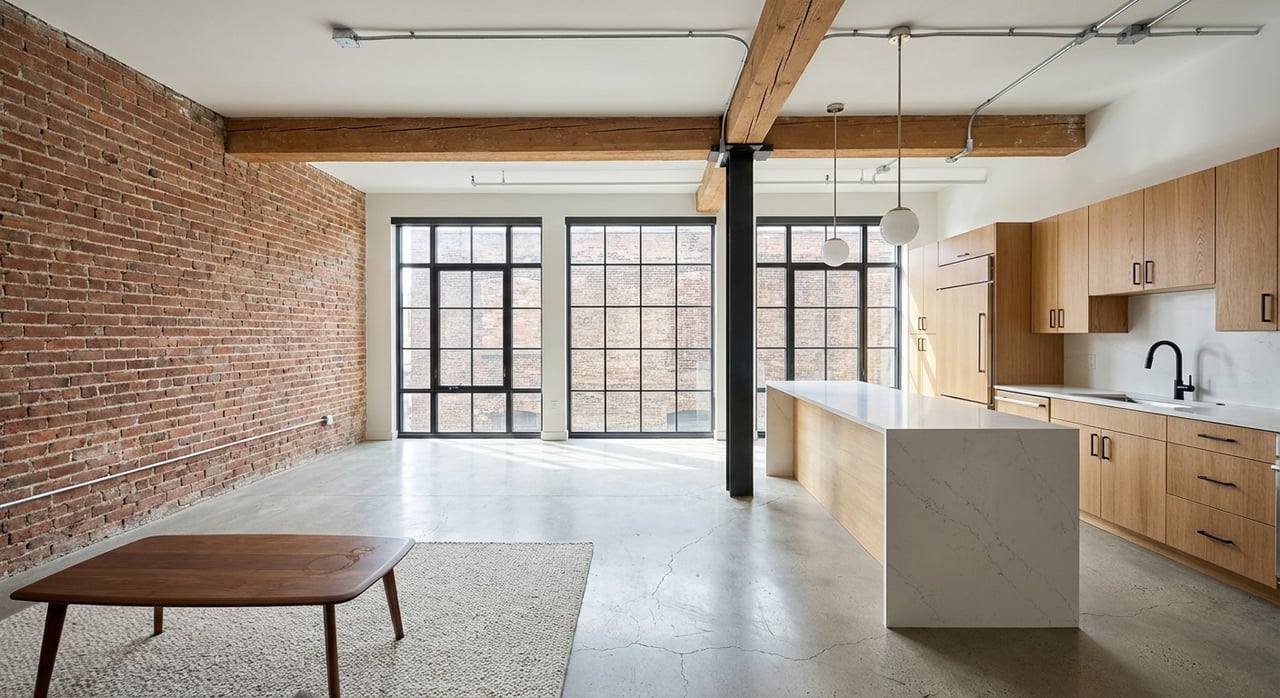
- What it is: A conversion of an older warehouse or factory with original structure intact. Expect exposed brick, heavy timber or concrete, large factory windows, and ceiling heights often over 10 feet. You can learn more about soft loft vs. hard loft differences.
- Typical layout: Open floor plans with fewer interior walls, limited built-in closets, and finishes that feel raw or semi-refined.
- Upside: Dramatic volume, natural light, and character prized by design-minded buyers.
- Tradeoffs: Sound and temperature can be less predictable, utility swings can be higher, and amenities may be limited unless the building was retrofitted.
Soft loft
- What it is: Newer construction or full remodels that mimic loft aesthetics but add modern systems, insulation, windows, and in-unit storage. See the same loft comparison resource.
- Typical layout: Open plans with defined bedrooms, better sound control, and amenity-forward buildings with fitness rooms, roof decks, bike storage, or a door staff.
- Upside: Easier daily comfort, more efficient utilities, and often stronger amenity packages.
- Tradeoffs: Less historic authenticity and sometimes higher initial prices based on finishes and amenities.
Traditional condos
- What it is: Individually deeded units in a condominium association. This category includes everything from loft conversions to modern mid-rises and high-rises.
- Typical features: Wide variety in age, services, rules, and HOA dues. Newer West Loop condos often add co-working lounges, fitness centers, and rooftop spaces, while older conversions can have fewer amenities but lower dues.
- Upside: Predictability, clearer governance, and potentially broader buyer appeal at resale.
- Tradeoffs: Association rules apply, and dues vary based on building services and reserves.
What it costs each month
Your monthly housing cost includes more than principal and interest. Plan for these line items when you compare buildings:
- Property taxes. In Chicago, a rule-of-thumb effective rate is about 1.69 percent of market value for 2022, according to the Civic Federation’s estimate. Always verify a property’s actual tax bill for its specific PIN.
- HOA dues. In West Loop buildings, a reasonable range runs from about $270 per month to over $1,300 per month depending on amenities, utilities included, and staffing. See an illustrative example of HOA ranges from recent listings. Review each building’s budget and reserves.
- Utilities. Soft lofts and newer condos often perform better on heating and cooling than older hard lofts. Budget around $100 to $300 per month depending on size and whether heat or water are included in dues.
- Insurance. Plan for a standard condo unit-owner policy.
- Parking. If not deeded, use a monthly garage pass in the range shown above.
- Reserves or special assessments. One-time charges can occur when a building undertakes major repairs.
Example A: Entry 1-bed soft loft
- Price: $350,000 with 20 percent down. Loan: $280,000.
- Sample principal and interest at a 30-year fixed 6.11 percent is about $1,700 per month. This rate aligns with recent Freddie Mac PMMS coverage.
- Property tax estimate at 1.69 percent: about $5,915 per year, which is roughly $493 per month. Source: Civic Federation estimate.
- HOA: $300 to $700 per month depending on building services.
- Utilities, insurance, parking: $150 to $450 per month depending on inclusions and whether parking is deeded or rented.
Approximate monthly total: about $2,900, with a realistic range from roughly $2,200 to $3,800.
Example B: Larger 2-bed condo or soft loft
- Price: $600,000 with 20 percent down. Loan: $480,000.
- Sample principal and interest at 6.11 percent: about $2,900 per month. Rate source: PMMS coverage.
- Property tax estimate at 1.69 percent: about $10,140 per year, which is roughly $845 per month. Source: Civic Federation.
- HOA: $600 to $1,200 or more per month for full-service buildings.
- Utilities, insurance, parking: $200 to $600 per month depending on inclusions and parking choice.
Approximate monthly total: about $5,000, with a range from roughly $3,800 to $7,000 or more.
Match your priorities to the right fit
Start with lifestyle, not just the look. Rank what matters most, then use this quick map.
| Priority | Best Match | Why |
|---|---|---|
| Authentic industrial character | Hard loft | Original brick, timber or concrete, large windows, dramatic volume |
| Modern comfort and amenities | Soft loft or newer condo | Better insulation, sound control, on-site fitness and roof decks |
| Predictability and resale appeal | Well-managed condo | Clear reserves, governance, and broader buyer pool |
| Lower utility volatility | Soft loft or newer condo | Modern systems reduce heating and cooling swings |
| Open plan for entertaining | Hard loft or soft loft | Flexible layouts with generous living space |
If authenticity and open plans top your list, look first at hard lofts. If climate control, soundproofing, and on-site amenities matter more, soft lofts or newer condos are often a better everyday experience.
Due diligence checklist
Make sure the building’s numbers and rules fit your goals. Request these items early so you can move quickly.
Must-request documents
- Association budget, latest audited financials, and reserve study. Review how reserves fund future repairs and replacements.
- Last 12 months of board meeting minutes. Look for upcoming projects or fee changes.
- Condo questionnaire or resale certificate for rules, rental policies, pet rules, and litigation. Use a condo questionnaire and resale certificate guide for context.
- Confirmation of what dues include. Ask for recent utility bills and the list of included services.
- Parking deed or lease details if applicable. Confirm costs and whether the space is transferable.
- Certificate of occupancy and conversion history, especially for older buildings. You can verify certificate of occupancy and permits to ensure residential use is legal.
Red flags to spot fast
- Very low HOA dues with little or no reserve study. That often points to future special assessments.
- Disclosures of active litigation or frequent special assessments. See a primer on common condo buying pitfalls and litigation.
- Units marketed as “lofts” with limited natural light or unclear legal residential status. Always verify.
Location and commute tips
You get excellent transit access in the West Loop. The Morgan station for the Green and Pink Lines sits near Fulton Market, and the Blue Line and Metra options are nearby depending on your route. If you need a car, run the numbers for deeded parking versus a monthly pass. If you plan to go car-light, prioritize walkability to your office and grocery options, and look for buildings with secure bike storage.
How to shop smart in the West Loop
- Get pre-approved before you tour. You will set clear budget guardrails and be able to act on a hot listing.
- Decide on must-haves versus nice-to-haves. Use the priority map to keep showings focused.
- Compare total monthly cost, not just price. Run P&I, taxes, HOA, utilities, and parking for each address.
- Request documents early. Solid HOA financials and clear rules can save you from surprise costs later.
- Move fast with a plan. The most desirable listings can go quickly, and early access helps in a tight market.
Ready to match a loft or condo to your lifestyle and budget in the West Loop? Get curated access, fast answers, and a clear plan with Matt Laricy. We will help you compare buildings, read the numbers, and win the right home.
FAQs
What is the difference between a hard loft and a soft loft in the West Loop?
- A hard loft is a converted warehouse or factory with original brick, timber or concrete, big windows, and open layouts, while a soft loft is newer construction that mimics the look but adds modern insulation, windows, closets, and amenities.
How much are typical HOA fees for West Loop condos and lofts?
- HOA dues vary widely, from roughly the high $200s per month to over $1,300 per month based on amenities, staffing, and included utilities. Always review the building’s budget and reserves.
What should I budget monthly beyond my mortgage for a West Loop condo?
- Add property taxes, HOA dues, utilities, insurance, and parking. Taxes can be estimated with the Civic Federation’s 1.69 percent effective rate as a rule of thumb, but verify the property’s actual bill.
Is parking included with most West Loop lofts and condos?
- Many units sell parking separately as deeded spaces. If not included, plan for a monthly garage pass that often ranges from about $150 to $350 or more near the West Loop.
What documents should I request before making an offer on a condo or loft?
- Ask for the HOA budget, audited financials, reserve study, the last 12 months of board minutes, the condo questionnaire or resale certificate, utility details, parking documents, and the certificate of occupancy for older conversions.
Are West Loop listings competitive right now?
- Yes. Desirable listings in well-located buildings tend to move quickly. Have your pre-approval ready and request HOA documents early so you can make a confident offer.