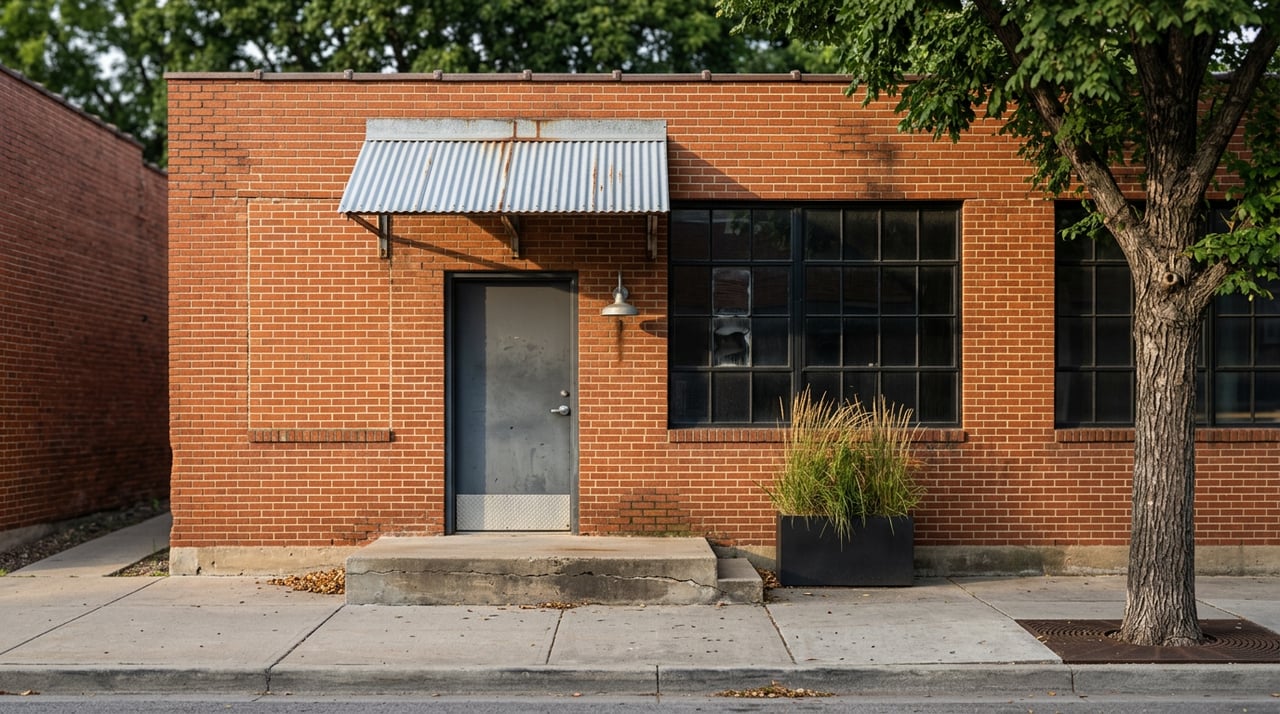
Ask anyone who doesn't live here what Ravenswood is known for and you'll get one answer: beer. Malt Row, the strip of converted industrial buildings that runs along the Metra tracks, has spent almost a decade building a reputation as one of the most concentrated craft-beer corridors in the country. That reputation is accurate. It's also incomplete, and this August is the month that proves it.
The Greater Ravenswood Chamber of Commerce scheduled its inaugural wellness block party for August 8 on Sunnyside Avenue and runs a rewards program steering diners toward immigrant-owned kitchens. One block over from the brewery corridor, Chicago's only classical-music street festival will close off Wilson Avenue for its eleventh year running. The neighborhood that got famous for beer is spending August proving it can run a much wider playbook, and the reason it can comes down to something most residents have never had a reason to think about: how small and walkable this commercial footprint actually is.
The corridor that keeps turning over without shrinking
Malt Row isn't static. Band of Bohemia, once the world's first Michelin-starred brewpub, operated here and closed. Aquanaut Brewing, Empirical Brewery, and Letherbee Distillery all had runs on the corridor and moved on or shut down. Metropolitan Brewing celebrated a decade in the neighborhood in 2021 and later left its riverside taproom behind entirely. None of that turnover has shrunk the corridor. It's replaced itself.
Right now, if you walk the stretch, you'll find:
- Half Acre Beer Company, open since 2007 and still anchoring the corridor with Daisy Cutter
- Begyle Brewing, the first taproom to open on Malt Row and still a neighborhood fixture for trivia nights
- Dovetail Brewery, next door to Begyle
- Spiteful Brewing, the nano-brewery squeezed in beside its much larger neighbor Half Acre
- Cultivate, the restaurant concept from the team behind Forbidden Root
- Is/Was Brewing, which opened its taproom at 5121 N. Ravenswood Ave in August 2024 and has grown saison sales by at least 10 percent annually since
- Demo Brewing Company, a newer nano-brewery and taproom
- Hop Butcher for the World, a regular at the corridor's own beer festival lineup
- KOVAL Distillery, Chicago's first legal post-Prohibition distillery
The corridor also has VIN312 Winery, its own working winery. The chamber describes the full strip as home to upwards of ten independent craft breweries plus that distillery and winery, all packed into a stretch that, per the Greater Ravenswood Chamber of Commerce, runs only from north of Foster Avenue into Bowmanville and is walkable in full from the Brown Line or Metra. When a business closes here, another opens fast enough that the corridor's identity never actually breaks.
What a decade of practice buys you
The ninth annual Ravenswood On Tap ran July 18 and 19 this year, and the fact that it's the ninth annual anything matters more than the beer list. A festival with nine years of institutional memory behind it can afford to experiment on the margins. This year that meant a new addition to the drink menu, Underberg Digestive Bitters, and something the corridor had never tried before.
"Mini Golf is a fun new addition this year," said Amy Czarkowski, the GRCC's director of events and marketing, describing the ninth annual festival to Chicago Food Magazine.
That kind of experiment is the tell. A one-year-old event can't take that kind of risk. The festival's donation model already funds small business support and public art through the Ravenswood Community Council, giving it room to experiment without worrying whether attendance holds up.
That accumulated confidence is also why the chamber felt comfortable launching something with zero track record in the same month.
The debut that has nothing to do with beer
The GRCC and Minh Hearing Solutions scheduled the inaugural Ravenswood Feel Good Fest for August 8, a block party on Sunnyside Avenue next to the Black Ensemble Theater, from 11 a.m. to 5 p.m. There was no beer angle here at all. Its planned program was built around 19 health and wellness businesses from around the neighborhood, with yoga from Chicago Hot Yoga, strength training from Bodi Shak, and dance instruction from Joel Hall Dancers & Center, plus a curated soundtrack from Loud Pizza Records between live sets on the Sunnyside Stage.
The event even had its own planned on-ramp: a five-mile community bike ride, also scheduled for August 8, starting at Rockwell on the River and ending at the fest. Riders were set to stop at local businesses along the way, get a look at the newly installed protected bike lanes on Clark Street, pass Graceland Cemetery, and finish at Clark and Sunnyside where Turin Bicycle was scheduled to be on hand to talk shop with anyone who wanted to nerd out about gear.
This was a new format for the chamber, in a year when it clearly had the operational bandwidth to arrange it. That's worth noticing if you live here, because it means the neighborhood's civic infrastructure isn't coasting on Malt Row's reputation. It's actively building new reasons to gather that have nothing to do with the corridor that made the neighborhood famous.
The same chamber also runs Dine in Solidarity, a year-long campaign built around rotating "Spotlight Weekends" at immigrant-owned restaurants, in partnership with Indivisible Lincoln Square and the Illinois Hispanic Chamber of Commerce. Spend $25 or more at a featured restaurant during a spotlight weekend and submit the receipt for a shot at $50 in gift cards to other Ravenswood restaurants. The spring spotlight weekend spent three days steering diners specifically to Falcon's Handcrafted Sandwiches, Pollo Express Ravenswood, and Taqueria Primo Chuki's, all three clustered on West Lawrence Avenue. Different audience, different premise, same organizing muscle.
The classical festival that predates the beer scene's rise
Then there's Thirsty Ears, running August 22 and 23 on Wilson Avenue between Hermitage and Ravenswood. This is the piece of the calendar most likely to surprise someone who thinks of Ravenswood purely as a beer destination. Access Contemporary Music's festival is now in its eleventh year, and Time Out Chicago has framed it as the city's answer for people tired of the cover bands and DJs that show up at most Chicago street fests, with a lineup that runs from Baroque to contemporary. The festival even includes a miniature version of the Sound of Silent Film Festival, where ensembles perform live scores to silent film screenings.
It runs long, too. Saturday goes from 2 p.m. to 11 p.m., Sunday from 1 p.m. to 9 p.m., with beer and wine, food trucks, and a kids zone folded in. If it rains, the whole thing moves indoors to All Saints Church on the same block, which seats 200.
Thirsty Ears isn't a spinoff of the neighborhood's beer identity. It's a parallel tradition that has quietly outlasted several of the breweries that came and went on Malt Row, run by a completely separate organization one block from the corridor everyone assumes is the whole story.
What this actually means if you live here
None of this required a new commercial development or a rezoning fight. It required a chamber with the operating history and staff capacity to run a beer festival, a wellness block party, a restaurant rewards program, and a hand-off to an entirely separate classical-music nonprofit, all inside the same few blocks. That's a specific kind of neighborhood infrastructure, and it's easy to miss if you've only ever thought of this corridor as a place to get a beer.
If you're already living in Ravenswood, the practical version of this is simple: your August calendar has more going on within a half-mile radius than most residents realize, and none of it requires driving anywhere. Feel Good Fest sits right on Clark Street. Thirsty Ears runs along Wilson Avenue at the edge of Ravenswood Avenue itself. Dine in Solidarity is built to be done on foot, restaurant to restaurant.
The neighborhood's reputation is still catching up to what it's actually doing. That gap is worth paying attention to, because it's usually the first sign that a place is about to get more attention than its current identity suggests.
For a closer look at what makes this stretch of the North Side distinct year-round, Matt Laricy's Ravenswood neighborhood guide breaks down the corridor, the housing stock, and what's changing block by block. If you're weighing a move into this part of the city or already call it home and want a read on where things stand, reach out. List with Laricy — sell faster, reach more buyers.