Thinking about trading your West Loop condo for a house in Elmhurst? You are not the only one. A lot of city homeowners reach the same point where more space, a different daily rhythm, or an easier path to a detached home starts to matter. The move can make a lot of sense, but only if the numbers, timing, and strategy line up. This guide walks you through what to expect, what Elmhurst housing looks like today, and how to plan the sale and purchase without creating unnecessary stress. Let’s dive in.
Why this move is so common
West Loop and Elmhurst serve very different stages of life, and that is exactly why this move comes up so often. West Loop gives you a premium downtown condo market, while Elmhurst offers a wider range of single-family housing and a commuter-friendly suburban setup.
Right now, West Loop remains a stronger-priced submarket than Chicago overall. Redfin shows a median sale price of about $499,000 in West Loop, while Realtor.com shows a median list price of $487,500, about 25 days on market, and a 101% sale-to-list ratio. That matters if your condo sale is going to help fund your next purchase.
Elmhurst, meanwhile, is a different type of market. Zillow shows an average home value of $622,463, a March 2026 median sale price of $681,333, 87 homes for sale, and homes going pending in around 7 days. Realtor.com shows a median listing price of $749,950, which tells you quickly that if you want a detached home there, you should be ready for fast-moving inventory and pricing that often sits above citywide Chicago levels.
What your West Loop condo can mean for your next budget
If you are moving from West Loop to Elmhurst, your condo equity is usually the key piece of the plan. The first question is not just, "What can I buy?" It is, "What can I buy after I sell, pay closing costs, and keep enough cash in reserve?"
That is especially important in Chicago because your condo sale has city-specific steps attached to it. The Chicago Real Property Transfer Tax applies to city transfers, and the city also requires a Full Payment Certificate to obtain the transfer-tax stamps used to record the deed. In plain English, your closing is not just about signing papers and collecting proceeds. There are local items that affect timing and net proceeds.
A smart first step is to estimate your likely sale price, subtract expected closing costs and moving expenses, and then build your Elmhurst budget from there. That gives you a real-world target instead of a wish list.
Elmhurst home styles and price bands
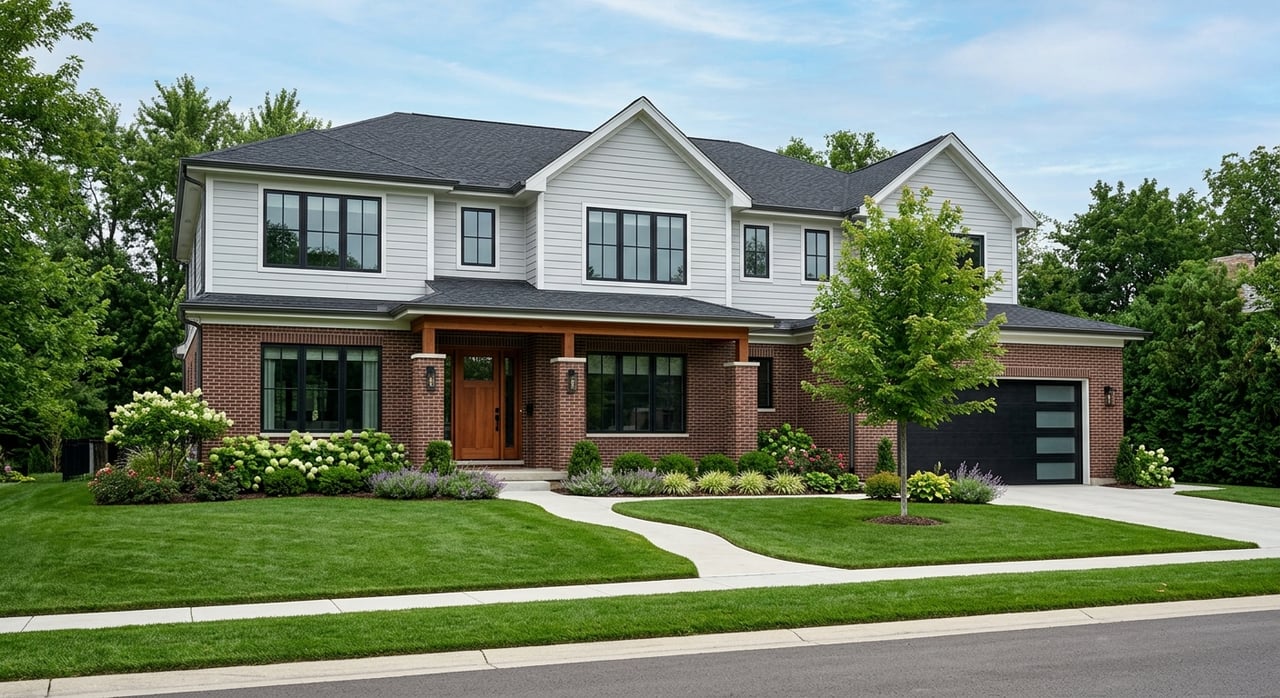
Elmhurst has a broad housing mix, and that is part of its appeal. According to the city’s resident guide, the housing stock includes ultra-modern new homes, historic Sears homes, 1920s Spanish Revival houses, classic Chicago-style bungalows, and mid-century ranches and split-levels.
The city’s comprehensive planning also points to relatively strict zoning and building controls, along with an emphasis on preserving historic housing stock even as redevelopment continues. For you, that means Elmhurst is not a one-note market. You can find older homes with character, updated homes with more modern finishes, and new construction at much higher price points.
Based on current listing snapshots in the research, Elmhurst roughly breaks down like this:
- Condos and townhomes: high-$300,000s to low-$400,000s
- Older single-family homes and updated split-levels: high-$400,000s to mid-$700,000s
- New construction and larger custom homes: often above $1 million
The data supports that range. Redfin shows Elmhurst condos with a median listing price of $379,000. Realtor.com listing examples include detached homes at $539,000, $569,000, $575,000, $995,000, and $1.475 million, plus a $399,000 townhouse. Zillow also shows new-construction homes from about $1.49 million to $1.85 million.
How to sequence the move
This is where most people get stuck. You want the Elmhurst house, but you do not want to carry two homes longer than necessary or rush into the wrong deal.
In most cases, the cleanest sequence looks like this:
- Get preapproved.
- Estimate net proceeds from your West Loop condo sale.
- Set a realistic Elmhurst budget.
- List the condo.
- Shop for Elmhurst with a clear financing plan.
- Structure timing carefully in both contracts.
That sequence matters because the sale often funds the purchase. Fannie Mae notes that sellers should factor in closing costs and moving expenses, and proposed closing dates should be part of the offer strategy. Before closing, title search and appraisal work typically happen in advance, and the seller usually receives sale proceeds at closing.
That means your move is less about luck and more about coordination. If you get the order wrong, you can create duplicated housing costs, cash-flow pressure, or a closing timeline that is too tight to manage.
Can you buy in Elmhurst before your condo sells?
Yes, but whether you should depends on your equity, cash reserves, and comfort with risk. There is no one-size-fits-all answer.
Most buyers moving from a West Loop condo into Elmhurst end up choosing one of three paths:
Use a bridge loan
A bridge loan is temporary financing that helps you buy a new home while planning to sell your current one within 12 months. For a buyer with strong condo equity, this can create flexibility and let you make an offer without waiting for the sale to close first.
The tradeoff is simple. More flexibility usually means more carrying cost and more moving parts. It can be useful, but only if the financial side is comfortable for you.
Make an offer with a home-sale contingency
A sale contingency gives you more protection because your Elmhurst purchase depends on your condo selling first. If your goal is to reduce risk, this can be a reasonable move.
The downside is competitiveness. In a market where homes can go pending in around 7 days, a sale-contingent offer may be less appealing to a seller than an offer with fewer hurdles.
Sell first and buy second
This is often the safest option financially. You know your exact proceeds, your exact buying power, and your exact closing timeline.
The downside is convenience. You may need temporary housing, a rent-back plan if available, or a very tight closing schedule to make the move feel seamless.
Bridge loan or sale contingency?
If you want the simple version, it comes down to strength versus safety.
| Option | Main Benefit | Main Tradeoff |
|---|---|---|
| Bridge loan | Can help you compete without a sale contingency | Adds short-term financing cost and complexity |
| Sale contingency | Protects you if your condo has not sold yet | Can make your offer less competitive |
| Sell first | Gives you clear numbers and less financial guesswork | May require temporary living arrangements |
A lot depends on how marketable your West Loop condo is, how much equity you have, and how fast you need to move. West Loop remains active, but it is not a market where you should assume every condo will fly off the shelf instantly. Strategy matters.
Closing logistics: Chicago versus DuPage County
One of the easiest mistakes in a city-to-suburb move is assuming both closings work the same way. They do not.
On the Chicago side, your condo sale includes city-specific steps such as the transfer tax and Full Payment Certificate process. On the Elmhurst side, property tax administration runs through DuPage County offices. The county clerk calculates tax rates for taxing districts, and the county treasurer handles tax bill delivery and payment administration.
That means you are not just changing addresses. You are moving between two different closing systems, and the details need to be tracked carefully.
Commuting from Elmhurst to downtown Chicago
If part of your hesitation is giving up a simple downtown routine, Elmhurst offers a clear commuter option. The Elmhurst Metra station is on the Union Pacific West line at 128 W. 1st St., and the line serves Ogilvie Transportation Center at 500 W. Madison.
Metra lists the station as accessible and notes that it has ticket machines and 1,487 parking spaces. The city guide also places Elmhurst about 16 miles from Chicago. If you still need regular downtown access, that rail connection is an important part of the decision.
What to watch before closing
The last stretch of this move is where details really matter. CFPB advises buyers to do a final walk-through and review closing documents carefully before closing.
That step matters even more when you are selling one property and buying another around the same time. A delay on one side can affect cash, movers, possession dates, and where you sleep that night.
A few practical items to keep front and center:
- Confirm your net proceeds before you shop seriously
- Build in cash reserves beyond the minimum needed to close
- Align contract dates as early as possible
- Review all closing documents carefully
- Plan for backup timing in case one side moves slower than expected
The real key to a smooth West Loop-to-Elmhurst move
This move is very doable, but it works best when you treat it like one connected strategy, not two separate transactions. Your condo pricing, your expected proceeds, your financing path, your offer terms, and your closing dates all affect each other.
That is why the best outcome usually comes from having a plan before you ever walk into an Elmhurst showing. When you know your likely sale range, understand the local closing steps, and match your offer strategy to your risk tolerance, you put yourself in a much stronger position.
If you are weighing a move from West Loop to Elmhurst, the goal is not just to buy the next home. It is to make the whole transition work cleanly from start to finish. If you want a clear plan for pricing your condo, timing your sale, and finding the right fit in Elmhurst, connect with Matt Laricy.
FAQs
Can I buy a home in Elmhurst before my West Loop condo sells?
- Yes, but it depends on your financing, available cash, and risk tolerance. Some buyers use a bridge loan, some write a sale-contingent offer, and others choose to sell first before buying.
Is a bridge loan better than a sale contingency for an Elmhurst purchase?
- A bridge loan can make your offer stronger because it may let you avoid a home-sale contingency, while a sale contingency gives you more protection if your condo has not sold yet.
How much closing cash should I reserve when selling a West Loop condo?
- You should reserve enough for Chicago-specific closing costs, moving expenses, and a cash cushion for your Elmhurst purchase, then build your target budget from your projected net proceeds rather than your gross sale price.
What price range should I expect for homes in Elmhurst?
- Current market snapshots suggest condos and townhomes in the high-$300,000s to low-$400,000s, many older single-family homes from the high-$400,000s into the mid-$700,000s, and new construction or larger custom homes above $1 million.
What kinds of homes are common in Elmhurst?
- Elmhurst includes a mix of housing types such as historic Sears homes, 1920s Spanish Revival houses, Chicago-style bungalows, ranches, split-levels, newer custom homes, condos, and townhomes.
Is Elmhurst workable for a downtown Chicago commute?
- Yes. Elmhurst is about 16 miles from Chicago and has a Metra station on the Union Pacific West line with service to Ogilvie Transportation Center in downtown Chicago.