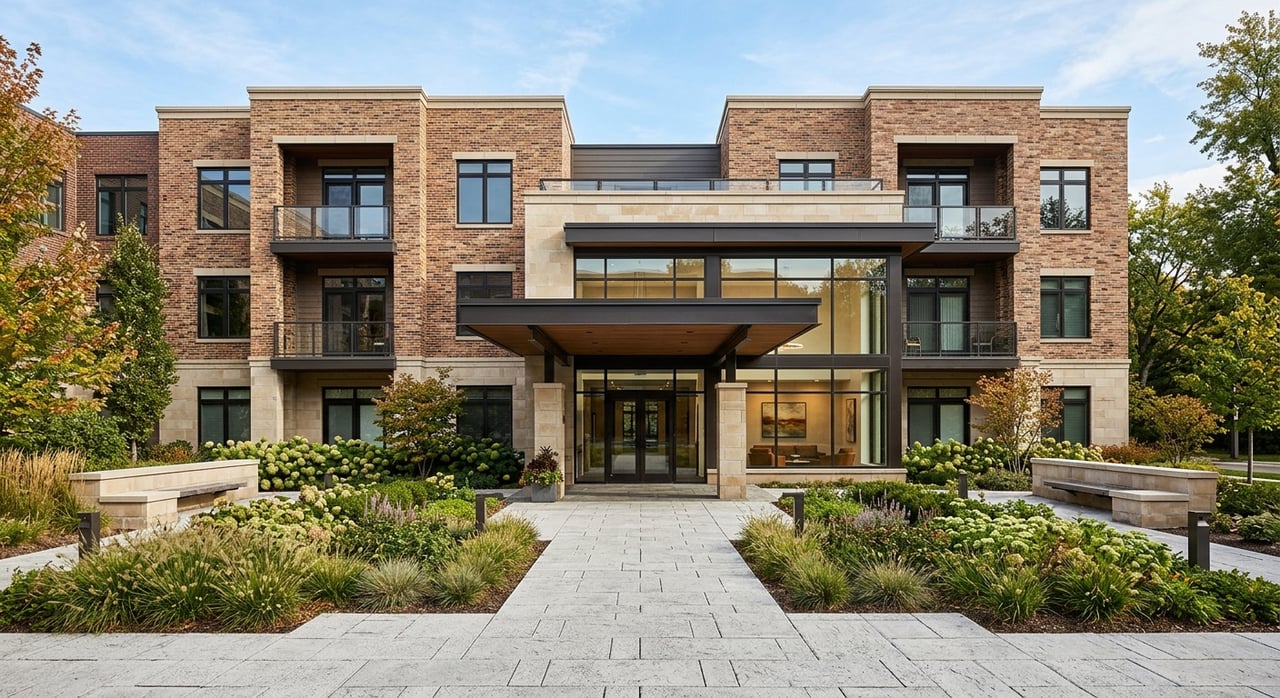
If you want Oak Brook convenience without the full workload of a detached home, townhomes and condos deserve a serious look. For many buyers, the appeal is simple: less exterior upkeep, strong location access, and homes that still offer meaningful space. In this guide, you’ll get a clear, practical breakdown of how condo and townhome living works in Oak Brook, what the main communities offer, and what to watch in the monthly costs before you buy. Let’s dive in.
Why Oak Brook Attached Living Stands Out
Oak Brook has long appealed to buyers who want a polished suburban setting with easy access to dining, shopping, green space, and major roads. The village describes itself as a western suburb about 15 miles from Chicago, with a strong business district, recreation assets, and access to three Pace bus routes plus Midway and O'Hare.
That matters if you want a home that feels low-maintenance without feeling disconnected. Oakbrook Center sits near I-88 and about 30 minutes from downtown Chicago, which adds to the lock-and-leave appeal for buyers who split time between the suburbs, the city, and travel.
Just as important, condos and townhomes are not an unusual fit here. Oak Brook’s zoning framework explicitly includes attached residential units, town houses, and garden-type low-density multiple-family dwellings, so this style of housing is already part of the village’s planning model.
Condo vs. Townhome in Oak Brook
In Oak Brook, attached homes often run larger than buyers expect. This is not always a market of tiny units and stripped-down floor plans. Many options include garage parking, private outdoor space, and layouts that feel closer to a single-family home than a typical starter condo.
What condos usually offer
Condos in Oak Brook tend to lean toward 1- and 2-bedroom layouts. You’ll often find balconies or patios, shared amenities, and association services that reduce day-to-day maintenance.
For buyers moving down from a larger house, that can be the sweet spot. You keep usable square footage and amenities nearby, but lose a lot of the exterior responsibilities.
What townhomes usually offer
Townhomes more often give you 2- or 3-bedroom layouts, attached garages, and features like finished basements or split-level living. In practice, they can feel more like a detached home with a smaller maintenance burden.
If you still want multiple levels, extra storage, and room for guests or a home office, a townhome may feel like the more natural transition. That is especially true if you are not ready to give up house-like living altogether.
Main Oak Brook Communities to Know
Inventory in Oak Brook’s attached-home segment is relatively limited, so community-level details matter. In a small market, pricing and buyer demand can shift heavily from one building or subdivision to another.
Oak Brook Club condos
Oak Brook Club is one of the best-known condo communities in the village. It has 316 units completed in 1975, with mostly 1- and 2-bedroom homes ranging from 1,383 to nearly 2,800 square feet.
That size range is notable because it gives buyers a very different experience than a compact urban condo. Homes include at least one fireplace and one balcony or patio, which helps preserve a residential feel.
The amenity package is also substantial. Residents have access to on-site management, maintenance and janitorial staff, a heated garage, a 24-hour gatehouse, a heated outdoor pool, a clubhouse, a fitness area, a library, and a secure walking path.
For a buyer prioritizing convenience and security, Oak Brook Club checks many of the right boxes. It is also a reminder that in Oak Brook, condo living can still feel spacious and service-oriented.
Oak Brook Colony townhomes
Oak Brook Colony is a condominium townhome community near restaurants, shopping, and forest preserves. It features 2- and 3-bedroom split-level homes with private patios, two-car garages, and finished basements.
The floor plans, including Monticello, Mount Vernon, Hawthorne, and Royal, were designed with more traditional house-style elements. Features listed by the community include fireplaces, cathedral-ceiling living rooms, bay-window breakfast rooms, and 2 or 3 baths.
This community tends to fit buyers who want attached living but still care a lot about layout and separation of space. If your goal is low-maintenance ownership without sacrificing a more home-like setup, Oak Brook Colony is an important one to understand.
Briarwood Lakes attached homes
Briarwood Lakes is a gated 55+ active-adult community set on 74 acres. It includes 199 attached homes made up of single-story ranch villas and traditional two-story townhomes.
Most residences run about 2,100 to 3,000 square feet with 2 to 3 bedrooms, 2 to 3 bathrooms, and an attached two-car garage. That makes it a strong option for buyers who want substantial space in a maintenance-light format.
The community fee covers a broad package, including common-area insurance, security, cable and high-speed internet, exterior maintenance, lawn care, and snow removal. For buyers seeking simpler ownership and fewer household tasks, that kind of fee structure can be a major advantage.
How Monthly Costs Really Work
One of the biggest mistakes buyers make is looking only at the purchase price. With condos and townhomes, you need to understand the full monthly ownership picture.
In Illinois, condo and common-interest association laws require annual budgets and financial disclosures that show how money is being allocated. That includes common expenses, reserves, capital expenditures, repairs, and in some cases procedures tied to special assessments.
What your association fee may cover
In plain English, the monthly fee may be paying for services and costs that a single-family homeowner would otherwise handle separately. Depending on the community, that can include:
- Exterior maintenance
- Lawn care
- Snow removal
- Security
- Common-area insurance
- Amenities such as pools, clubhouses, or fitness spaces
That does not automatically make an attached home more or less expensive than a house. It means the cost structure is different, with more of the ownership burden bundled into a regular monthly assessment.
Why reserves matter
A healthy reserve fund can help a community plan for longer-term repairs and capital projects. If reserves are weak, owners may face more pressure from fee increases or special assessments later.
That is why the annual budget, reserve study if available, and annual summary of reserves and common expenses matter so much. These documents are often the clearest snapshot of whether a building or association is planning responsibly.
Taxes still count in Oak Brook
Oak Brook’s tax page states that the village property tax levy is $0. That can sound appealing at first glance, but it does not mean homeowners pay no property taxes.
DuPage County property records for Oak Brook parcels still show multiple taxing bodies, including schools, county, park district, township, and other entities. So when you budget for a condo or townhome here, think in terms of mortgage, taxes, insurance where applicable, and association fees together.
What Buyers Should Review Before Making an Offer
In a market like Oak Brook, details matter more than general assumptions. Two homes with similar square footage can carry very different monthly costs and resale dynamics depending on the community.
Before you move forward, ask to review:
- The proposed annual budget
- The annual summary of receipts and common expenses
- Reserve information or a reserve study, if available
- Any recent or pending special-assessment history
- What the monthly assessment actually includes
This step is especially important in a thin-inventory market. When options are limited, it is easy to fall in love with a floor plan and move too fast past the financial side.
Oak Brook Market Snapshot for Condos and Townhomes
As of early June 2026, Oak Brook’s attached-home market is relatively small. Redfin showed 9 condos for sale at a median listing price of $690,000 and 4 townhouses for sale at a median listing price of $975,000.
That small inventory base matters because it can make pricing feel uneven from one community to the next. Oak Brook Club alone had 4 condos for sale at a median listing price of $690,000, which reinforces how building-specific this market can be.
Across the broader Oak Brook market, Realtor.com showed about 65 homes for sale with a median listing price of $832,000 and a median of 40 days on market. Redfin’s all-home market page reported a median sale price of $1.05 million in March 2026 and 70 days on market.
Attached homes sit inside that broader luxury-leaning market, but they behave as their own niche. Current listing examples show a wide price spread, with condos around $245,000 on Realtor.com and townhome examples roughly from $375,000 to $1.125 million on Redfin.
The takeaway is simple: in Oak Brook, you are rarely buying just the village name. You are buying a specific building, floor plan, age, service package, and amenity set.
Who Condo or Townhome Living Fits Best
Oak Brook attached living often works best for buyers who value convenience, location, and lower maintenance more than a big yard. That can include busy professionals, move-down buyers, and people making a city-to-suburb or suburb-to-city lifestyle shift, many of whom start that search by talking with real estate agents in Chicago who also know the western suburbs well.
For many of these buyers, the winning combination is security, garage parking, exterior maintenance, and access to major roads and destinations. Oak Brook’s location near I-88, Oakbrook Center, Pace routes, and both major airports supports that type of lifestyle well.
That does not mean every condo or townhome is interchangeable. Some buyers will prefer a full-service condo feel, while others will want a townhome layout with more privacy and storage. The right fit usually comes down to how you want your daily life to work, not just how many bedrooms you need.
The Bottom Line on Oak Brook Attached Homes
If you are considering Oak Brook condos or townhomes, think beyond the label of “low-maintenance.” The real decision is about how much space you want, which services you value, and whether the community’s financial setup matches your comfort level.
Oak Brook gives you some unusually spacious attached-home options, with communities that can offer garages, patios, basements, gated access, and amenity packages that are hard to find in one place. In a limited-inventory market, having the right guidance can help you compare communities clearly and avoid expensive surprises.
If you want help sorting through Oak Brook condos, townhomes, or a move between the city and suburbs, connect with Matt Laricy for direct, informed guidance.
FAQs
What is the difference between condo and townhome living in Oak Brook?
- In Oak Brook, condos more often offer 1- to 2-bedroom layouts with balconies or patios and shared amenities, while townhomes more often offer 2- to 3-bedroom layouts, attached garages, and features like basements that feel more like a detached house.
What do Oak Brook condo or townhome association fees usually cover?
- Depending on the community, fees may cover exterior maintenance, lawn care, snow removal, security, common-area insurance, and amenities such as pools, clubhouses, fitness spaces, cable, or internet.
Are Oak Brook condos only for downsizers or older buyers?
- No. Oak Brook condos and townhomes can also fit busy professionals and buyers who want a lock-and-leave lifestyle, garage parking, and easier access to shopping, highways, and airports.
What should you review before buying a condo or townhome in Oak Brook?
- The most useful documents include the proposed annual budget, reserve information or reserve study if available, annual summary of common expenses, and any recent or pending special-assessment history.
Are property taxes included in Oak Brook association fees?
- Not necessarily. Oak Brook’s village property tax levy is $0, but homeowners still pay property taxes tied to other local taxing bodies, so you should review taxes and association fees as separate parts of your monthly cost.
How competitive is the Oak Brook condo and townhome market?
- The attached-home segment is relatively thin, with only a small number of condos and townhouses listed as of early June 2026, which makes building-specific pricing and community-level comparisons especially important.